How to produce a carbon footprint of maternity services
Maternity care and climate change
Maternity services are one of the NHS’s high-volume services, with over 673,000 births in the UK in 2022. Each of these will have been preceded by approximately 30 weeks of regular antenatal care and followed up with postnatal care.
At the same time, significant inequalities persist in maternal services across the UK, disproportionately affecting women and birthing people from ethnic minorities and socio-economically disadvantaged backgrounds. Black women are four times more likely to die in pregnancy or childbirth compared to white women, and Asian women face twice the risk. Additionally, women from the most deprived areas are more likely to experience stillbirth compared to those from the least deprived areas.
Further, pregnant women and infants are some of the most vulnerable to the effects of climate change, such as extreme heat, air pollution, and natural disasters, which can exacerbate existing health issues and lead to complications such as preterm birth, low birth weight, and respiratory problems.
Climate change and health are inextricably linked. Disadvantaged communities are often more exposed to environmental hazards, are less able to recover from these hazards, and often have reduced access to high-quality healthcare. This compounding effect exacerbates health disparities.
NHS services and resource use causes greenhouse gas emissions. It is a sad irony, then, that it may be contributing to health vulnerabilities as well as to environmental and ecological crises through its own activities. Addressing inequalities and environmental harm from healthcare services not only improves health outcomes and experiences of care but contributes to a more just and sustainable healthcare system.
Green maternity project
The project ‘Taking collective action to deliver low carbon, equitable maternity care’ aimed to make maternity care more sustainable and equitable. The project, a collaboration between the Royal College of Obstetricians and Gynaecologists (RCOG), the Royal College of Midwives (RCM), the Centre for Sustainable Healthcare (CSH), and the Sustainable Healthcare Coalition (SHC), launched in April 2024 and ran for one year, funded by SBRI Healthcare. We have developed this guide from our learnings from mapping and carbon footprinting some pilot centres as part of the project.
Carbon footprinting for maternity services
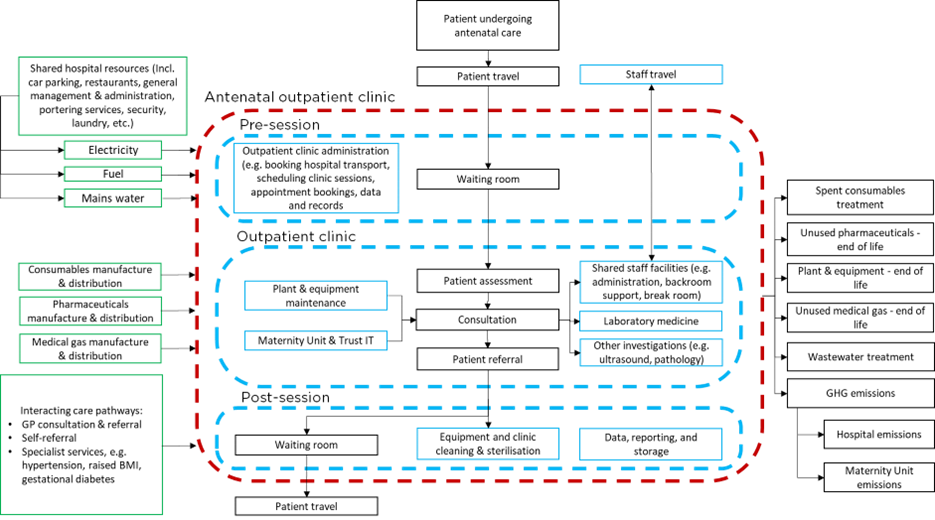
This guide outlines a six-step process to appraise the environmental sustainability of maternity care pathways, with examples for reference. This is derived and adapted from the Sustainable Care Pathways Guidance, which gives more detailed advice and covers the steps in more detail.